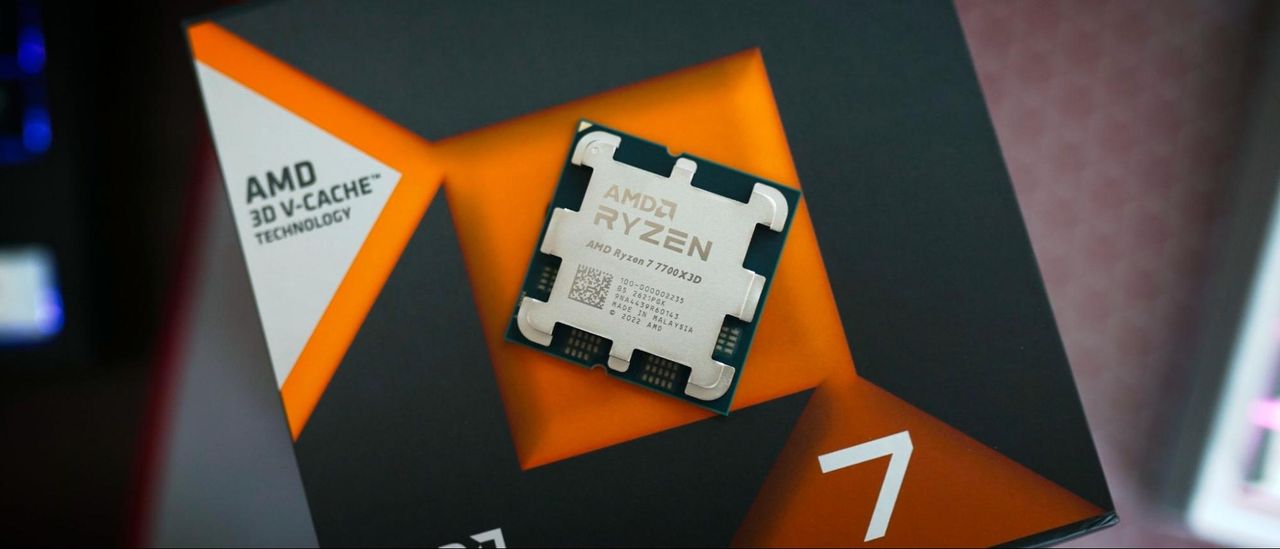
Recent reviews of the AMD Ryzen 7 7700X3D processor indicate that while it shares many architectural similarities with its more powerful sibling, the Ryzen 7 7800X3D, it primarily differs by featuring lower boost clock speeds. This particular segmentation strategy, historically employed by AMD to offer varied price points and performance tiers, appears to be less impactful in terms of value with the 7700X3D. Consumers often anticipate that a product with slightly reduced specifications will come with a significantly more attractive price tag, a dynamic that the 7700X3D doesn't fully embrace.
Affiliate contentGames up to -90% off
Instant key delivery on Instant Gaming
Browse deals →The crucial finding from these evaluations is that despite its reduced clock speeds, the 7700X3D often doesn't deliver a proportionally cheaper alternative to the 7800X3D. This undermines the traditional value proposition seen in prior generations where a slightly less powerful variant often provided substantial savings. For gamers, the performance difference between the 7700X3D and 7800X3D might be negligible in many scenarios, thanks to the shared 3D V-Cache technology that significantly benefits gaming workloads. However, the price gap might not be wide enough to justify choosing the 7700X3D if overall value and future-proofing are key considerations.
Ultimately, the 7700X3D emerges as a competent processor, especially for gaming, but it struggles to carve out a distinct niche in terms of price-to-performance ratio. Potential buyers seeking the best all-around value in AMD's X3D line might still find the 7800X3D a more compelling purchase, or consider other non-3D V-Cache Ryzen processors if their use case extends significantly beyond gaming where the cache benefits are less pronounced.