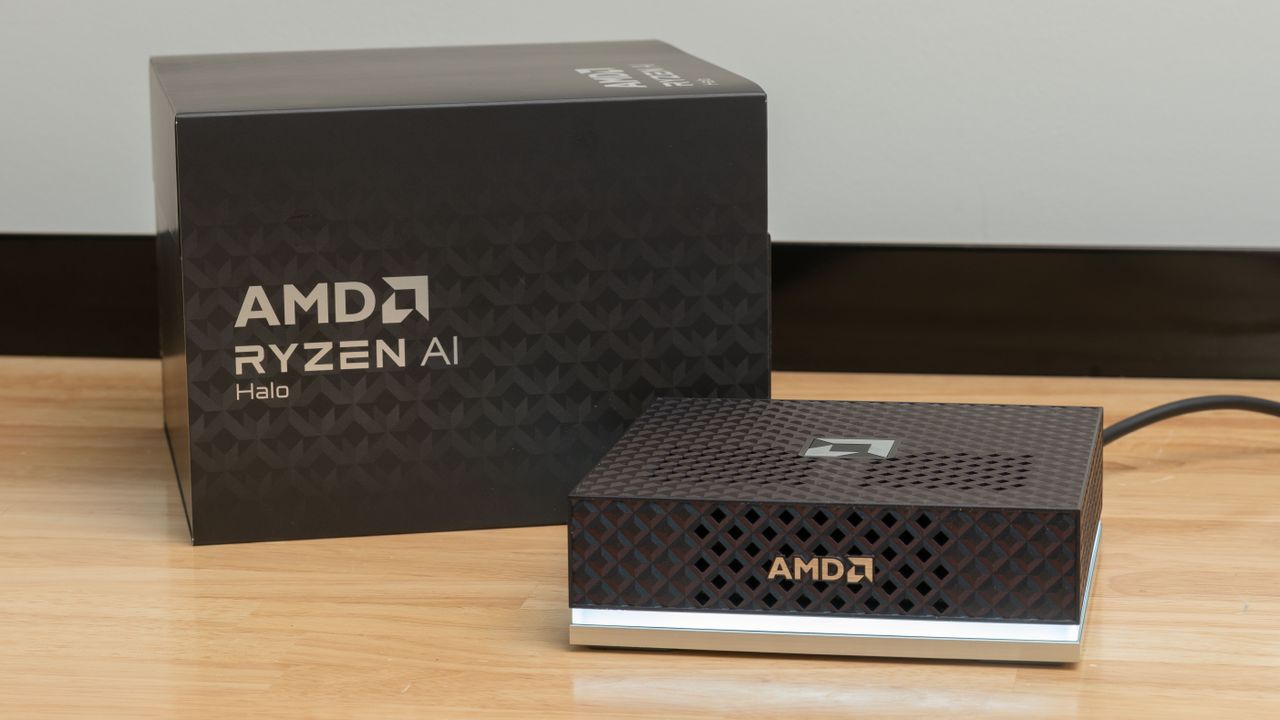
AMD's new Ryzen AI Halo emerges as a strong contender in the burgeoning market of dedicated local AI hardware, presenting itself as a complete, ready-to-use system. This offering is designed to cater specifically to users interested in deploying AI models on their local machines, bypassing the need for cloud-based services. The system is bolstered by AMD's commitment to ecosystem support, featuring comprehensive first-party software, intuitive utilities, and thorough documentation, which is invaluable for developers and hobbyists exploring the intricate world of local AI.
Affiliate contentGames up to -90% off
Instant key delivery on Instant Gaming
Browse deals →At its core, the Ryzen AI Halo utilizes the potent Ryzen AI Max+ 395, also known by its codename Strix Halo. This System-on-a-Chip (SoC) is engineered to deliver substantial AI processing capabilities, providing a solid platform for a wide array of AI-driven tasks. However, despite its impressive specifications and AMD’s focused software strategy, the performance metrics and broader application compatibility of the Strix Halo SoC reportedly trail behind Nvidia’s GB10, which currently sets a high bar in the industry.
Another significant factor to consider is the pricing. The Ryzen AI Halo positions itself at a premium price point, which might be a barrier for some potential adopters, especially when juxtaposed with its performance against top-tier competitors. While the integrated nature and extensive support are undeniable advantages, the cost-to-performance ratio in comparison to leading alternatives like Nvidia’s offerings suggests that AMD is aiming for a niche market of users who prioritize a cohesive, well-supported local AI experience, even if it comes at a higher initial investment.