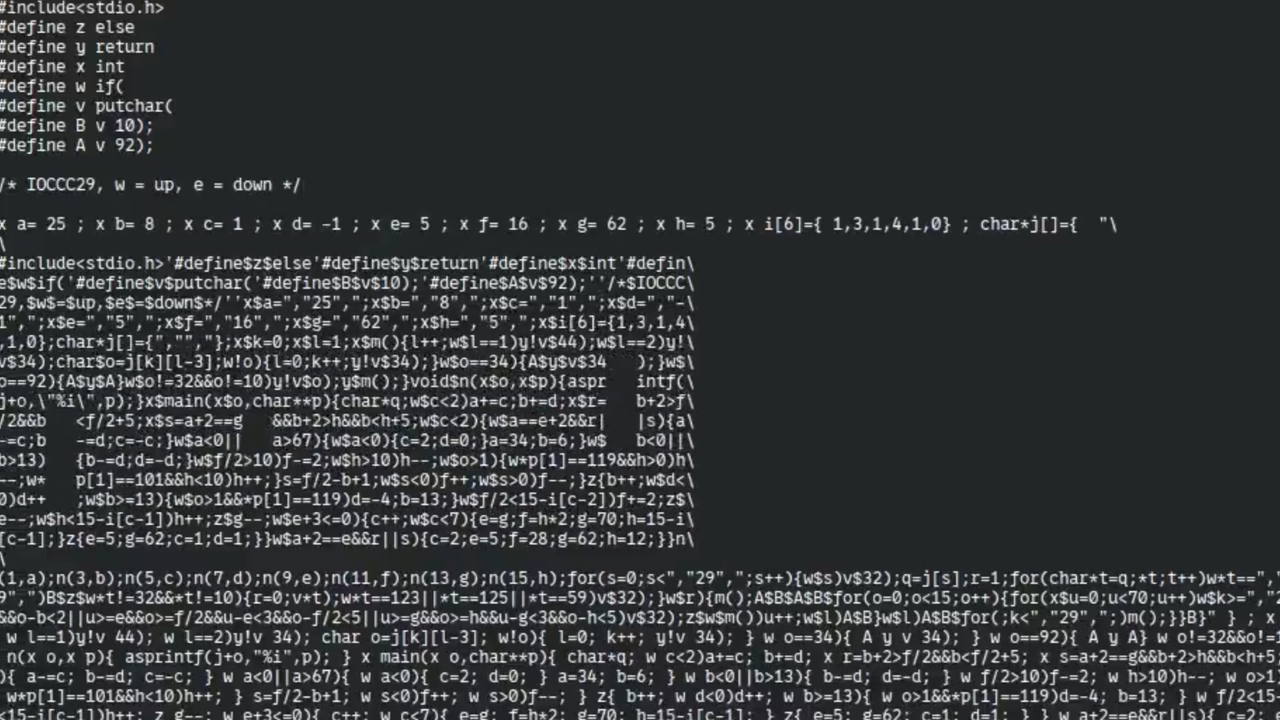
The 29th International Obfuscated C Code Contest (IOCCC) recently celebrated a fascinating win, with Jonah Uellenberg securing the coveted Ping Pong Prize. His winning entry was a highly unorthodox version of the classic game Pong, distinguished by an incredibly intricate and self-referential design. What truly sets Uellenberg's creation apart is its extraordinary ability to recompile its own source code during each individual frame of gameplay. This means the game is, in a sense, continuously rebuilding itself in real-time as it runs.
Affiliate contentGames up to -90% off
Instant key delivery on Instant Gaming
Browse deals →This remarkable feat was made possible by a custom compiler that Uellenberg developed specifically for this project. Instead of simply interpreting or executing static code, this compiler allows the Pong game to generate new code snippets or modify existing ones on the fly, and then immediately translate these changes into executable instructions. Such a dynamic process pushes the boundaries of traditional software development and offers a glimpse into highly adaptive and self-modifying programs.
The intention behind the IOCCC is to challenge programmers to write the most obscure, confusing, or otherwise 'obfuscated' C code possible, while still maintaining functionality. Uellenberg's Pong entry perfectly embodies this spirit, blending complex technical prowess with a playful reimagining of a beloved game. It’s not just an impressive coding achievement; it’s a brilliant conceptual artwork highlighting the power and flexibility of self-compiling systems, ultimately delivering a unique and technically sophisticated take on a retro classic.