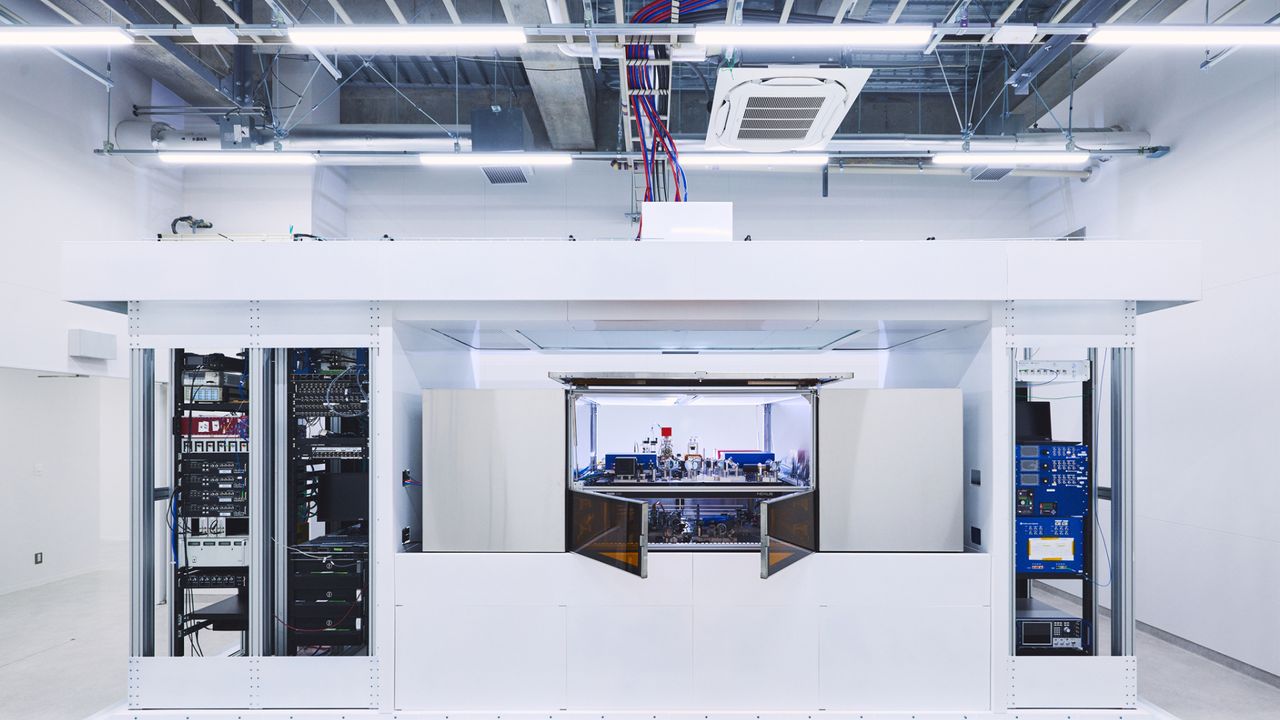
Neural Atom Quantum Computing (NAQC) is emerging as a pivotal area in the quest for advanced quantum computing, offering a novel paradigm that moves beyond the static physical arrangement of qubits. This cutting-edge technology leverages arrays of laser-cooled trapped atoms, providing a flexible and scalable foundation for quantum operations. Unlike traditional quantum computing architectures where qubits are fixed in position, NAQC systems allow for software-defined, reconfigurable arrays. This means that qubits can be physically moved and re-arranged mid-computation, drastically enhancing the adaptability and complexity of quantum algorithms that can be executed.
Affiliate contentGames up to -90% off
Instant key delivery on Instant Gaming
Browse deals →The strategic roadmap for NAQC emphasizes a shift towards customizable quantum processors, where the geometry and interaction of qubits are not hardwired but can be dynamically controlled. This capability is crucial for implementing error correction schemes and executing more intricate quantum algorithms that demand precise qubit interactions and connectivity. By decoupling the physical location of a qubit from its computational role, NAQC promises to unlock new levels of performance and efficiency.
Several pioneering companies are at the forefront of this revolution. QuEra, known for its expertise in neutral atom arrays, is developing highly scalable quantum processors. Atom Computing focuses on creating quantum computers based on individual neutral atoms, offering high coherence and control. Pasqal, another key player, utilizes arrays of neutral atoms to build quantum processing units capable of addressing complex computational challenges. These companies are not just incrementally improving existing quantum technologies; they are fundamentally redefining how quantum computers are designed and operated, paving the way for systems that are both powerful and resilient against quantum decoherence and errors.