Apple Silicon has garnered considerable attention in the realm of local artificial intelligence, largely thanks to its architectural design offering significantly higher memory bandwidth compared to other unified memory platforms. This advantage positions it as a compelling choice for researchers and developers keen on pushing AI inference capabilities directly on their devices.
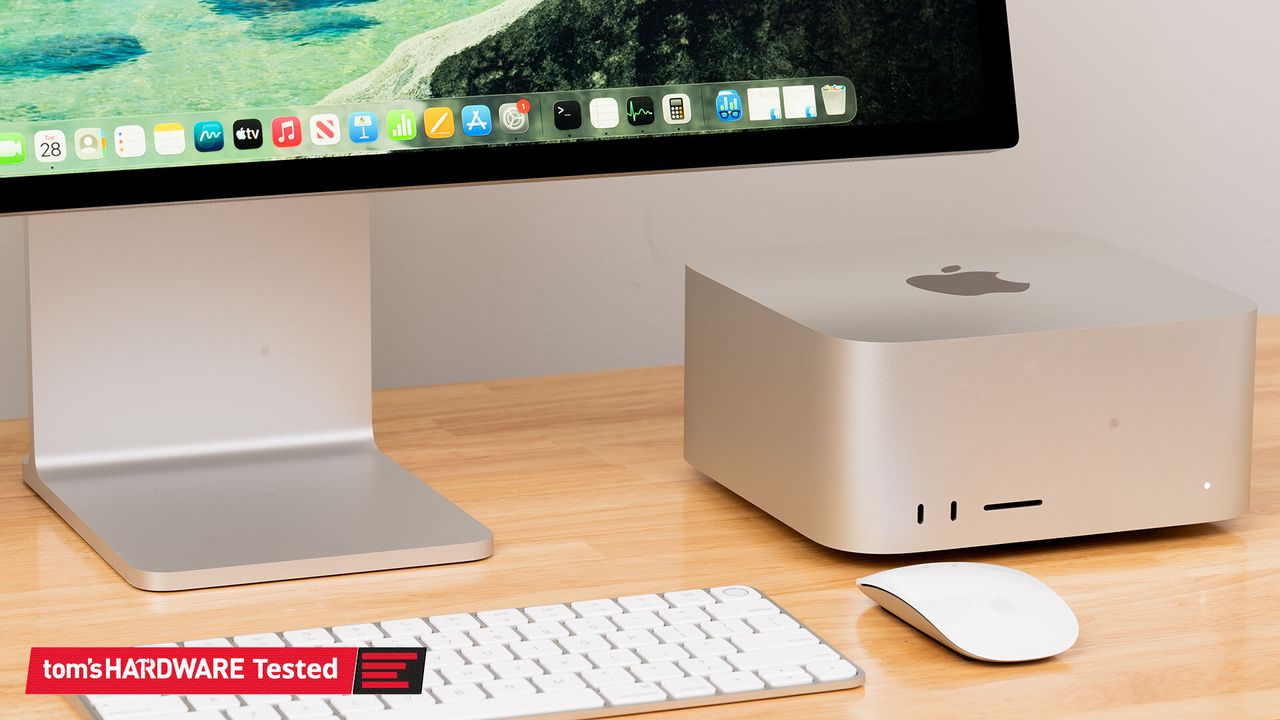
To thoroughly evaluate this premise, we subjected the M4 Max version of Apple's Mac Studio to rigorous testing, focusing on its performance in local large language model (LLM) inference. The results were noteworthy, particularly concerning decode throughput – a critical metric reflecting how quickly an AI model can generate output tokens once a prompt is provided.
Affiliate contentGames up to -90% off
Instant key delivery on Instant Gaming
Browse deals →Our benchmarks indicated that the M4 Max in the Mac Studio demonstrably outperforms leading competitors, including NVIDIA's GB10 (Grace Blackwell) and AMD's Strix Halo, in decode throughput. This suggests that for tasks heavily reliant on rapid token generation, Apple's latest silicon offers a compelling advantage.
However, the study also highlights an important nuance: while impressive memory bandwidth of 546GB/s certainly contributes to this performance, it doesn't unilaterally guarantee overall superiority in all aspects of local LLM inference. Factors such as model quantization, specific workload characteristics, and the efficiency of the AI framework's utilization of the hardware can also play significant roles. The M4 Max excels in its defined strengths, but a holistic view of AI performance requires considering a broader spectrum of metrics beyond just memory bandwidth.