Back
Android Authority1 d ago

Google TV's Screensaver Charm: Where is the Native Photos App?

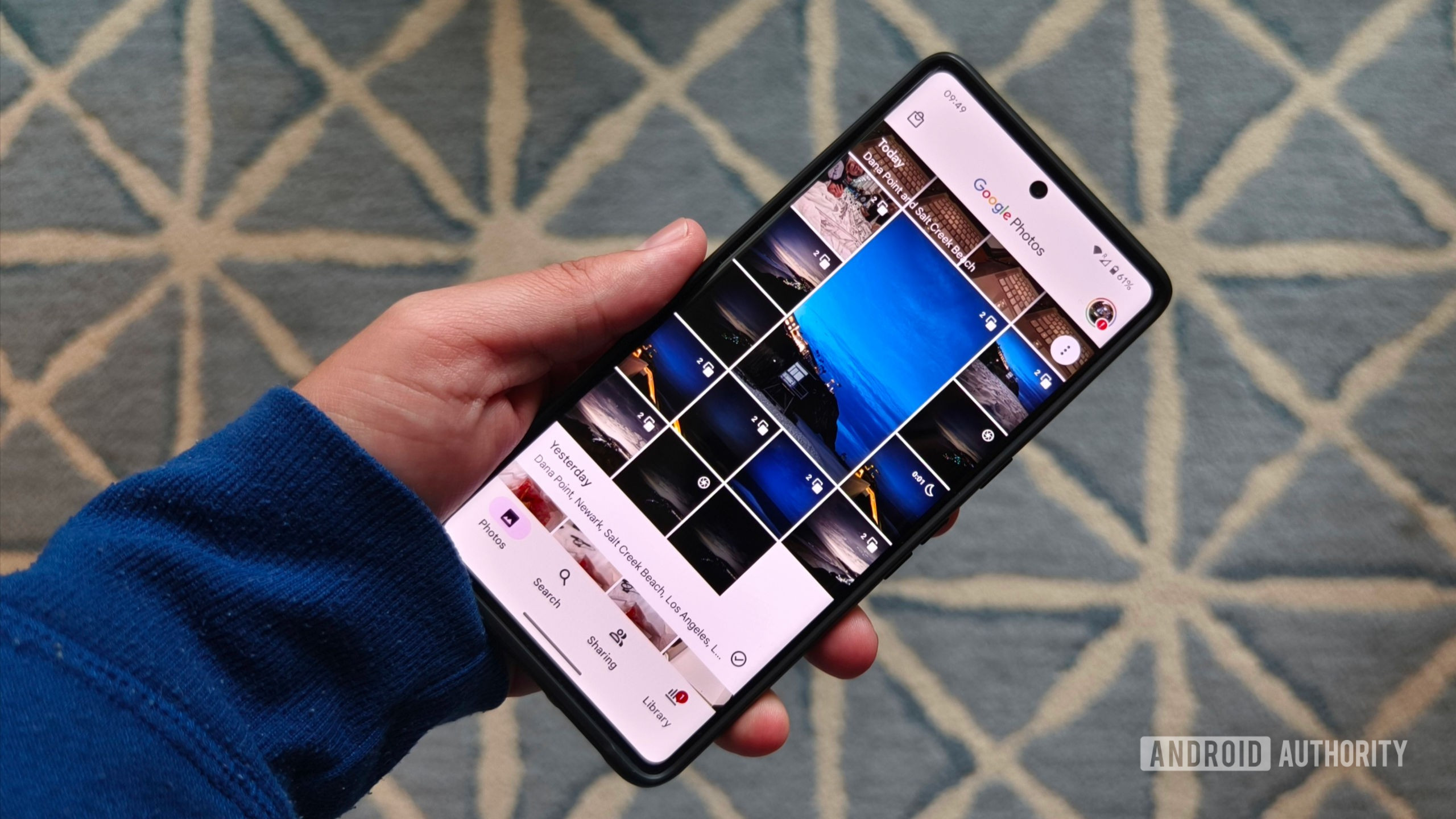
Despite admiring Google TV's visually appealing screensaver, a core frustration persists for many users: the glaring omission of a native Google Photos app. In an age of seamless cloud integration, the continued absence of direct access to personal photo libraries on the big screen remains a bewildering oversight.

Google TV's Screensaver Charm: Where is the Native Photos App?

In the modern smart home ecosystem, the ability to seamlessly access personal media across devices is a given. Yet, for all its advancements and intuitive features, Google TV continues to baffle users with a peculiar oversight: the absence of a dedicated, native Google Photos application. While the platform's ambient screensaver is genuinely beautiful and often showcases stunning imagery, it only serves to highlight the irony of not being able to easily display one's own cherished memories.

Affiliate content
Instant Gaming

Games up to -90% off

Instant key delivery on Instant Gaming

Browse deals →

It's a perplexing situation, especially considering how deeply Google Photos is integrated into the broader Google ecosystem. Users can upload, organize, and share their photos with incredible ease on smartphones and web browsers, but transferring that convenience to the largest screen in the house remains an unnecessarily cumbersome task. The existing workarounds, often involving casting from a phone or using third-party apps, feel like a step backward in an era where direct native access should be a standard.

The demand for a native Google Photos app on Google TV isn't just about minor convenience; it's about fulfilling a fundamental expectation of modern media consumption. Many users envision their smart TV as a central hub for all digital content, and personal photos are an integral part of that experience. The current situation leaves a significant gap in an otherwise robust platform, making a charming screensaver feel like a bittersweet consolation prize when what users truly desire is the simple, direct ability to relive their own visual narratives on their TV screen.

Summary based on third-party reporting.

Original source: Android Authority

Recommended

AMD's RDNA 5 GPUs Expected Late 2027, Aligning with Nvidia's Next Generation
Tom's Hardware3 h ago

AMD's RDNA 5 GPUs Expected Late 2027, Aligning with Nvidia's Next Generation

Anticipation is building for AMD's RDNA 5 gaming GPUs, with industry partners at Computex hinting at a late 2027 or early 2028 release. This timeline places AMD's new offerings directly alongside Nvidia's rumored RTX 60 series, setting the stage for a competitive next-gen GPU battle.

Read article
ASML Surpasses Expectations, Becomes Europe's Most Valuable Company
Tom's Hardware3 h ago

ASML Surpasses Expectations, Becomes Europe's Most Valuable Company

ASML recently reached a staggering market capitalization of $674 billion, solidifying its position as the most valuable company in European history. This unprecedented valuation reflects strong investor confidence, fueled by anticipated increases in EUV output and its critical role in advanced chip manufacturing.

Read article
Google Secures Massive Compute Power with SpaceX, Projecting Significant Data Center Revenue
Tom's Hardware4 h ago

Google Secures Massive Compute Power with SpaceX, Projecting Significant Data Center Revenue

Google has inked a monumental $920 million monthly deal with SpaceX to secure 110,000 Nvidia GPUs starting in October 2026. This strategic partnership is poised to dramatically boost Google's data center revenue, potentially surpassing its combined income from Starlink, launch services, and AI by 2025.

Read article
RetroPad: The Feature-Rich Notepad from XP, Packed into Under 3KB with x86 Assembly
Tom's Hardware4 h ago

RetroPad: The Feature-Rich Notepad from XP, Packed into Under 3KB with x86 Assembly

A new creation called 'RetroPad' recreates the beloved Notepad experience from Windows XP with full feature parity, yet remarkably occupies less than 3KB of space. Developed by Windows veteran Dave W Plummer using x86 assembly, it showcases incredible efficiency and a nostalgic nod to classic software design.

Read article